Is Duct Cleaning Worth It in Orange County? An Honest Look
Written by Cody
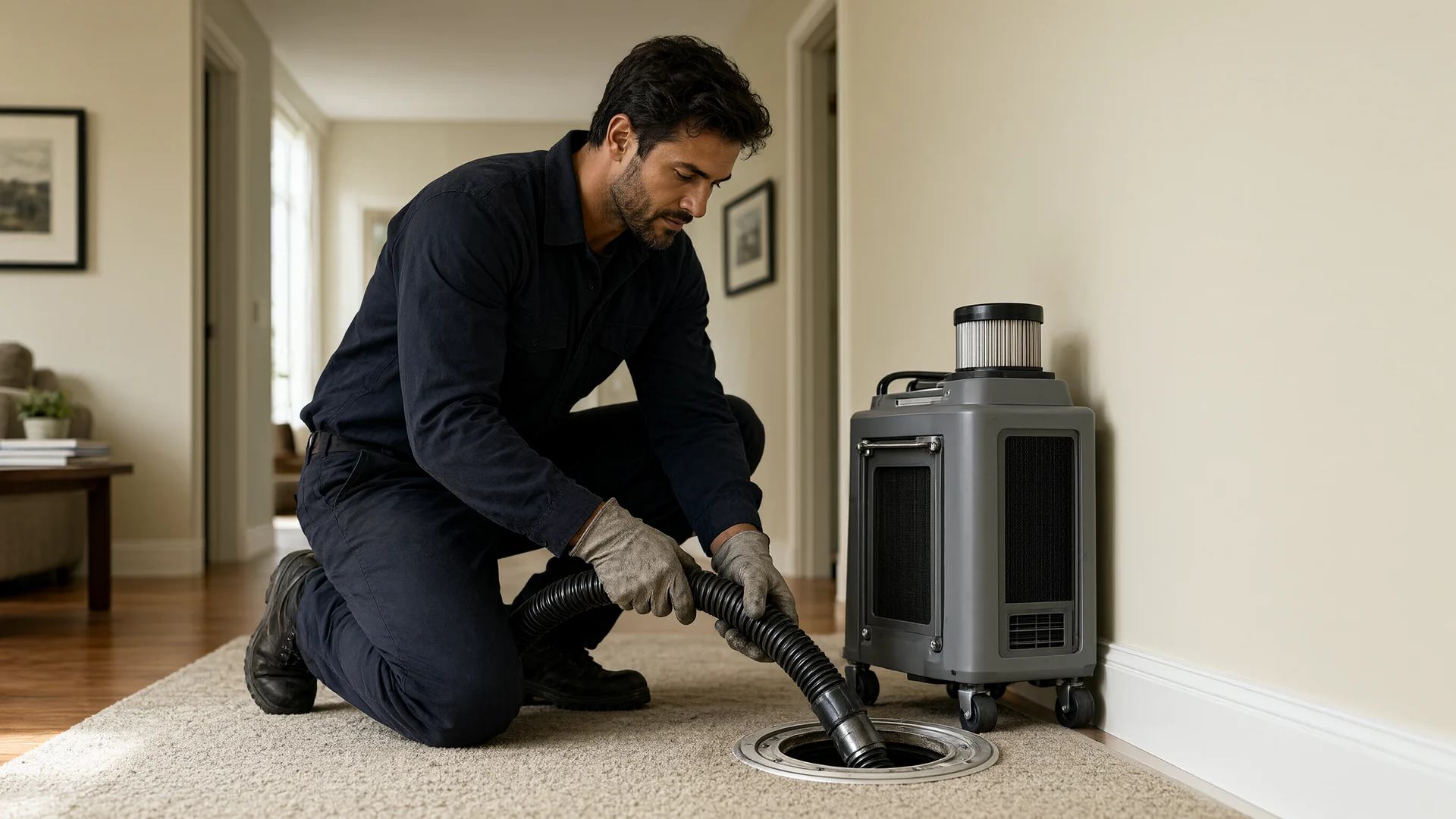
Quick answer: Usually not. The EPA says to consider duct cleaning when ducts hold substantial visible mold on hard surfaces, a vermin infestation, or debris heavy enough to blow out of your registers. Allergies, dust, and high bills usually trace back to filtration, humidity, or leaking ducts.
That answer costs us work. It is still the right one.
What Does the EPA Actually Say About Duct Cleaning?
The EPA’s guidance, Should You Have the Air Ducts in Your Home Cleaned?, was published in 1997 and last updated on EPA’s site in February 2026. It still reads like a consumer warning, not an ad.
- “Duct cleaning has never been shown to actually prevent health problems.”
- “There is no evidence that a light amount of household dust or other particulate matter in air ducts poses any risk to health.”
- “EPA does not recommend that the air ducts be cleaned routinely, but only as needed.”
The agency also warns against anyone claiming EPA certification, which it does not issue, and publishes its own price band: $450 to $1,000 per heating and cooling system, typically.
Coils, fans, and heat exchangers are a different question. The EPA says some research suggests that may improve efficiency, but not vacuuming ducts alone: “little evidence exists that cleaning only the ducts will improve the efficiency of the system.”
When Is Duct Cleaning Actually Worth It?
The EPA lists three conditions. Here is what they look like in the homes we work in.
1. Substantial visible mold on hard surfaces inside the system. Growth on sheet metal, the plenum, or the air handler cabinet, not a musty hallway smell. On the coast it starts with condensation: a cold plenum sweating through June gloom in a closet with no return air. Three EPA cautions apply: fix the moisture source or the mold returns; wet or moldy insulation cannot be cleaned, only replaced; and because a stain is not a diagnosis, a lab can confirm mold from a strip of tape for about $50.
2. Vermin in the ducts. Droppings, nesting material, urine-soaked insulation. We find it in older attics near open space, and where a chewed flex run sat open for a season. Cleaning is half the job. The entry point gets sealed, or you repeat this next year.
3. Ducts clogged with excessive debris, or particles discharging from registers. The remodel case: drywall dust and demo debris pulled into returns while a kitchen came apart. If dust puffs out when the system kicks on, that’s a real signal.
Two more situations count as judgment calls: a system that ran for months with no filter, and contamination after a water loss or fire. Those are not EPA categories.
If none of that describes your house, cleaning is cosmetic. Cosmetic is allowed. It’s just not a health purchase.
When Is Duct Cleaning a Waste of Money?
These are the calls where we tell people to keep their money.
- “The house is always dusty.” Usually a 1-inch filter changed twice a year, or a filter slot with gaps that let air bypass the media.
- Allergies, asthma, or eczema. Cleaning is not a treatment.
- An annual plan with no inspection behind it. There is no evidence-based annual requirement for residential ducts.
- Leaky or damaged ductwork. A disconnected attic joint is not fixed by vacuuming. That needs duct sealing or duct repair.
- A phone quote. A whole-house price without seeing the system is a guess, usually a low one meant to get a truck in your driveway.
Does Duct Cleaning Help Allergies, Asthma, or Eczema?
Mostly no. The specialists point at filtration and moisture instead.
The EPA is blunt: duct cleaning has never been shown to prevent health problems. The AAAAI’s patient guidance does not mention duct cleaning at all. It points at humidity between 30 and 50 percent, monthly filter changes, HEPA vacuums, and removing sources like carpet and clutter. The CDC’s mold guidance makes the same move: clean up the mold and fix the moisture, because moisture grows it.
Wirecutter put it as plainly in its 2026 investigation. Duct cleaning “is treating the symptom. It’s not treating the root cause,” said Joseph Allen, who runs Harvard’s Healthy Buildings program. Filters and a clean coil are the smarter spend.
Eczema deserves its own line. No allergy or dermatology body we can find recommends duct cleaning for it, and we have never watched a homeowner’s flares improve after one. If a company promises otherwise, ask which study they cite. Then ask again.
What actually helps:
- Filtration sized to the blower. We usually land on MERV 11 to 13, changed on schedule. Higher is not better if the pressure drop starves airflow.
- Sealed ducts. Attic returns pull in insulation fibers and outdoor air.
- Humidity control. 30 to 50 percent indoors. Coastal homes may need dehumidification, and dry winter air may need a humidifier. If the house feels clammy rather than dusty, start with why a house feels stuffy with the AC on.
- A clean coil and drain pan. The component cleaning the EPA actually suggests may pay off.
Why Is Duct Advice Different in Orange County?
National guidance assumes a generic house. Four local conditions change the math.
Marine layer humidity, May and June
Huntington Beach, Costa Mesa, and Newport Beach sit under a marine layer that keeps air damp for weeks. Closet air handlers sweat, condensate pans stay wet, and what grows first is not dust. Vacuuming a wet plenum buys one season. Fixing insulation, slope, and drainage is the repair.
Santa Ana winds and wildfire smoke
When the South Coast Air Quality Management District issues a smoke advisory, that air gets pulled into returns with the ash. Inland and canyon-adjacent homes see it first. The right response is filtration and closed windows during the event, then a filter change. Cleaning two weeks later does not undo what circulated.
1950s through 1980s housing stock
Anaheim, Santa Ana, Garden Grove, and Fullerton are full of ranch-era homes with original flex duct, sagging supports, and interior liner crumbled to dust. Cleaning a disintegrating liner makes it worse, because the liner is the contamination. That run needs replacement.
Renovation dust
Irvine, Tustin, and Mission Viejo remodel constantly. Drywall dust in a return is a legitimate cleaning case, the one time we recommend it without debate. The cheaper move is sealing registers and shutting the system off during demo. That step gets skipped more than it should.
How Much Does Duct Cleaning Cost in Orange County in 2026?
Local pricing runs above national benchmarks. Access, two-story layouts, and attic heat push it up.
| Scope | 2026 benchmark | What it means locally |
|---|---|---|
| Full system, per the EPA | $450–$1,000 per system | The agency’s own published range |
| Average project, per Angi | $389 average, most jobs $271–$509 | Smaller scopes, easy access |
| Per vent, per Angi | $25–$50, about $35 typical | Typical 3-bedroom: 10–15 vents |
| Labor, per Angi’s 2026 data (via NerdWallet) | $90–$125 per hour, 3–8 hours on site | Access and contamination drive the range |
The arithmetic is consistent for once: twelve vents at $35 is $420, inside Angi’s typical range and the EPA’s.
NerdWallet lists add-ons separately: pest control $108–$261, rodent removal $189–$665, mold and mildew removal $1,223–$3,753, asbestos $5–$20 per square foot. The last two are different trades, and a quote that folds them in without itemizing is hiding the number.
The $99 special, explained honestly. At $90 to $125 an hour, three hours of labor is $270 to $375 before a truck, a HEPA vacuum, insurance, and a second technician. So $99 whole-house is either a loss leader on a four-vent condo or a door-opener that climbs once someone shows you a photo of “mold.” Some photos are real. Some are a dirty access panel. Get the scope in writing, and ask what the price becomes if they find contamination.
HiLo quotes after inspecting, never over the phone. If you don’t need cleaning, that’s the answer.
Cleaning vs. Sealing vs. Repair vs. Balancing
| Your complaint | The service that addresses it |
|---|---|
| Visible debris, post-remodel dust, musty return | Duct cleaning |
| High bills, whistling vents, air escaping into the attic | Duct sealing |
| Crushed, torn, disconnected, or sagging run | Duct repair |
| One room never gets comfortable | Air balancing |
| Dryer takes two cycles, door is hot | Dryer vent cleaning |
| Static shocks, cracked wood, dry sinuses | Whole-home humidifier |
One number matters more than dust. ENERGY STAR reports that in a typical house 20 to 30 percent of the air moving through the duct system is lost to leaks, holes, and poorly connected ducts, and that leaky ducts can reduce system efficiency by as much as 20 percent. That’s a bigger number than anything dust does to your bill. Cleaning does not touch it.
The indoor air quality services page lays out how these fit together.
Can You Clean Your Ducts Yourself?
Partly. The DIY part is worth doing. Vacuum grilles with a brush attachment. Pull return grilles and wash them. Change the filter on schedule and check it sits flush. Seal obvious gaps at boots with mastic or foil tape.
What you can’t do safely is clean the inside of runs in an attic or crawlspace. Proper cleaning uses negative pressure, a HEPA vacuum, and rotary tools gentle enough not to tear flex. The EPA warns an inadequate vacuum setup “can release more dust, dirt and other contaminants than if you had left the ducts alone.” A shop vac duct-taped to a register is exactly that failure mode: it stirs the pile and blows it into the hallway. The EPA also notes that for accessible flex duct, replacement can be cheaper than cleaning. In a 1960s Anaheim attic with crumbling liner, that’s usually true.
How Do You Spot a Duct Cleaning Scam?
The service is not a scam. The sales model around it often is.
Ask what method they use. The trade reference is NADCA’s ACR, Assessment, Cleaning and Restoration of HVAC Systems. The current edition is ACR 2025, which replaced ACR 2021 in September 2025. In practice: source removal under negative pressure with HEPA filtration, plus resealing every access cut. If the answer is “we have a special truck” with no mention of pressure or containment, keep asking.
Ask for before-and-after photos of your system. Not stock images. Yours.
Check the license. The EPA’s guidance lists California among states requiring a special license for duct cleaning, though that list is still published from 1996, so treat it as a floor rather than a warranty. HiLo holds C-20 license #1155955, verifiable through the Contractors State License Board. Nationally the trade is thinly regulated, which is why it is worth asking.
Discount certification claims. The EPA neither certifies nor endorses duct cleaners. NADCA membership is real. “EPA certified” is not.
Know the robocall rule. The FTC prohibits prerecorded sales calls unless the seller holds your signed, written agreement to receive them, and an existing business relationship does not count. An unsolicited offer of a $79 duct cleaning is not a public service announcement.
Other red flags: a “free mold test” that always finds mold (the CDC does not recommend mold testing at all). A tech who will not let you look in the access port. Pressure to sign today. No local address. A price too low to cover labor.
How Often Should You Clean Your Ducts?
There is no universal number. A company that gives you one before inspecting is reciting a script.
- Look at the system during annual maintenance. Filters, airflow, coil, drain pan, and accessible ductwork get checked together.
- Clean when a condition appears. Post-remodel debris, rodent activity, water damage, visible mold, or airflow that drops without explanation.
- Recheck sooner in high-risk homes. Pets, coastal humidity, a system that runs constantly. Every two to three years is reasonable for an inspection, not cleaning.
Condition beats calendar.
What HiLo Inspects Before Recommending Anything
We start at the air handler, not the vacuum. A technician checks filter condition and media bypass, static pressure and airflow, the blower wheel, coil cleanliness, drain pan slope, accessible runs for tears and disconnected joints, flex liner, and moisture or pest evidence.
Then we say what the system needs: sealing a leaky run, repairing a crushed section, balancing a system that never delivered air evenly. Sometimes nothing.
HiLo Heating & Air has been family-owned since 2016 and works out of 8131 Electric Ave, Stanton, CA 90680. We serve Anaheim, Santa Ana, Irvine, Huntington Beach, Costa Mesa, Garden Grove, Newport Beach, and the rest of Orange County and Los Angeles. Call (714) 853-5534.
Frequently Asked Questions
Is duct cleaning worth it in Orange County?
Usually not, unless one of the EPA’s three conditions applies: substantial visible mold on hard surfaces, vermin, or debris blowing out of the registers. Wet insulation and post-remodel dust are the local exceptions.
How much does duct cleaning cost in Orange County?
The EPA’s range is $450 to $1,000 per system. Angi’s 2026 data puts the average at $389, with most jobs between $271 and $509. Per-vent pricing runs $25 to $50.
Is duct cleaning a scam?
The service is legitimate when it addresses real contamination. The scam is the sales model: unsolicited calls, $99 come-ons that balloon on site, fake mold tests, and claims of EPA certification.
Does duct cleaning help allergies or asthma?
No evidence supports that. The EPA says cleaning has never been shown to prevent health problems, and AAAAI guidance emphasizes humidity control, filtration, and source removal.
How often should air ducts be cleaned?
No fixed interval. Clean when there is a reason: mold, pests, water damage, renovation debris, or restricted airflow. Otherwise inspect at annual maintenance.
Can I clean my air ducts myself?
Grilles, registers, and accessible boots, yes. Interior runs in an attic need negative pressure, HEPA filtration, and tools that will not tear flex.
Why do I keep getting duct cleaning calls?
A known robocall pattern. The FTC requires a signed, written agreement before prerecorded sales calls, so most are illegal. A legitimate contractor does not cold-call.
If your ducts are genuinely contaminated, cleaning is a fair spend and we will say so. If they’re not, we’d rather show you what needs fixing. Request an inspection or call (714) 853-5534.
How this was written: Cody is a HiLo lead technician with EPA Section 608 certification, working under the company’s C-20 license. Every EPA, CDC, FTC, and ENERGY STAR claim links to its source. Prices are Angi and NerdWallet 2026 data, checked in October 2026.
Cody
Verified TechnicianLead HVAC Technician & Content Lead
Cody is a lead technician at HiLo Heating & Air with over a decade of hands-on experience repairing, installing, and maintaining HVAC systems across Orange County. He holds EPA Section 608 certification and works under HiLo’s California C-20 contractor license (#1155955). Cody writes HiLo’s HVAC blog to help homeowners understand their systems, spot problems early, and make informed repair-versus-replace decisions.
Need help with this? HiLo can help.
Related services from HiLo Heating & Air:
Related Articles
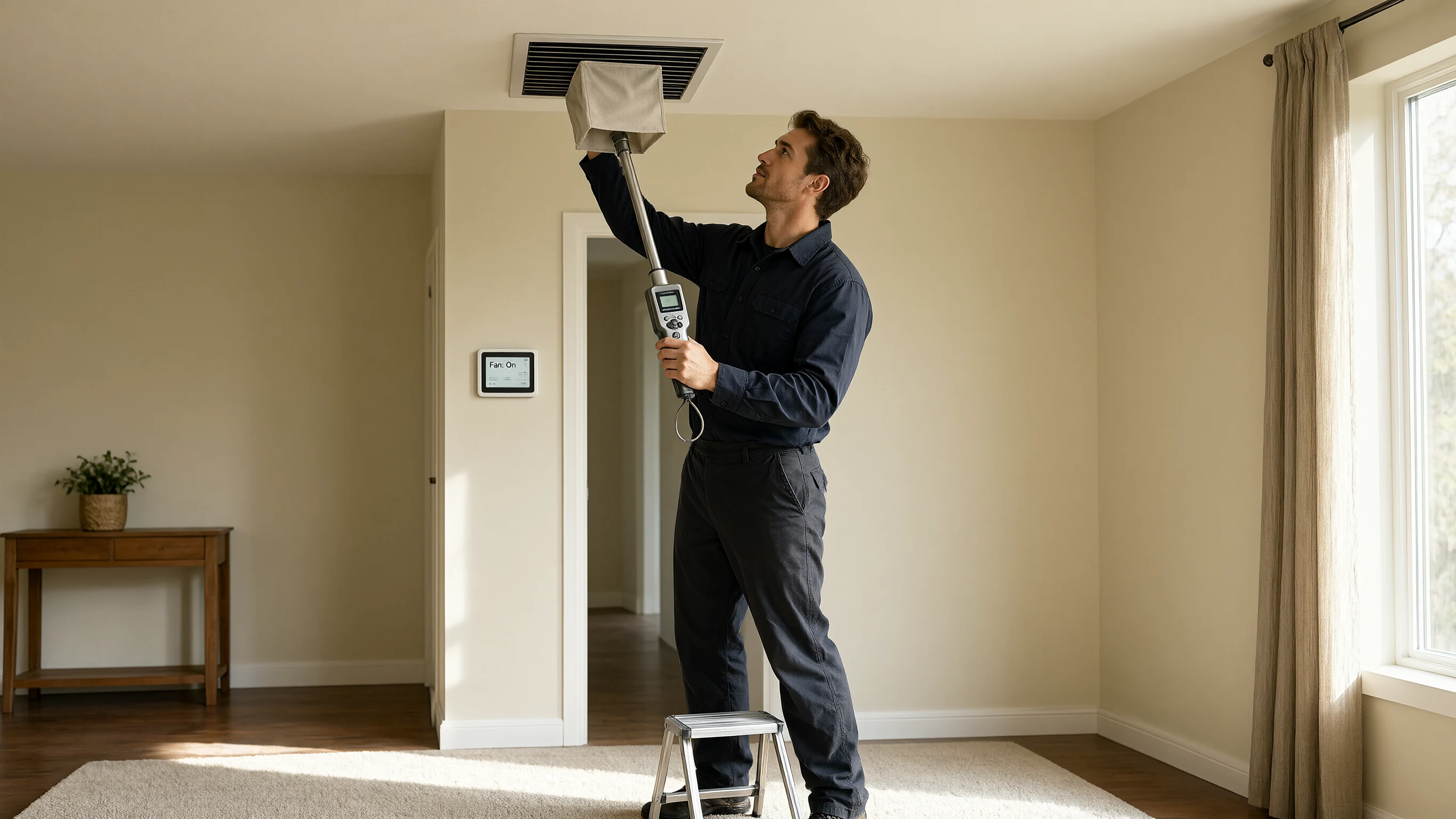
Why Your House Feels Stuffy With the AC On in Orange County
Cool air, clammy rooms, no real relief. How to tell if humidity, stale air, uneven airflow, or odors are making your Orange County house feel stuffy.
Read article
HVAC Duct Repair in Stanton, CA: Signs, Costs to Consider and When to Replace
Learn the signs your ducts need repair, what it costs to consider, and when replacement makes sense. Local duct repair in Stanton and Orange County.
Read article
HVAC System Inspection in Stanton, CA: What to Expect and Why It Matters
An HVAC system inspection finds the real cause of uneven rooms, weak airflow and high bills. Here is what to expect and why it matters.
Read articleNeed HVAC Help?
Call HiLo Heating and Air today for expert service. Explore our services or find your city.
(714) 853-5534