HVAC System Inspection: What Really Gets Checked and Why It Protects Your Home and Wallet
Written by Cody
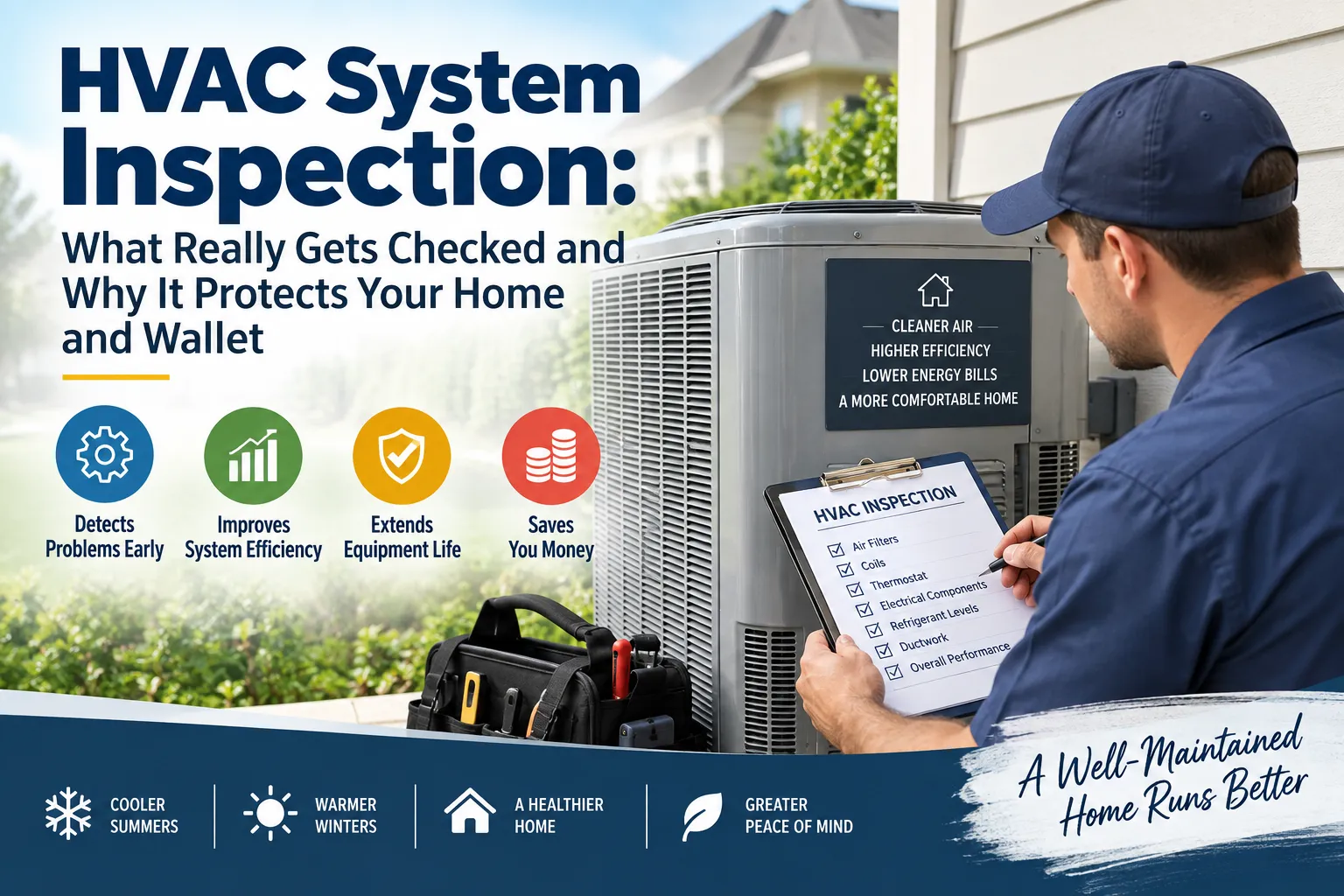
Heating and cooling equipment is easy to ignore. It hums along in a closet, an attic, or beside the house, quietly doing its job until the day it stops. By then, a small worn part has often turned into an expensive failure. A thorough HVAC system inspection is the closest thing homeowners have to a health checkup for their comfort equipment, catching problems while they are still cheap and simple to fix.
What a Technician Actually Examines
A proper visit goes far beyond glancing at the unit. Here is what gets checked on a typical inspection.
| Component or System | What the Technician Checks | Why It Matters |
|---|---|---|
| Thermostat | Tests accuracy | An inaccurate thermostat makes the whole system run off schedule |
| Electrical connections | Tightens connections and measures voltage and amperage on motors | Loose wiring and worn parts cause failures and safety risks |
| Blower wheel, belts, and bearings | Inspects the blower wheel, checks belts where present, and looks for worn bearings | Worn parts reduce airflow and can fail mid-season |
| Refrigerant | Measures pressure and temperature readings | Confirms the cooling side is charged correctly |
| Airflow and static pressure | Takes airflow and static pressure measurements | Shows if the system is straining against restrictions |
| Heat exchanger (gas furnaces) | Examines it for cracks | A cracked heat exchanger relates directly to carbon monoxide safety |
| Burners | Checks for proper flame | An improper flame wastes fuel and can damage the furnace |
| Venting | Reviews the venting system | Proper venting protects against carbon monoxide buildup |
The Parts People Forget
Ductwork often matters as much as the equipment itself. Leaky joints, crushed flexible runs, and missing insulation in hot attics waste conditioned air before it ever reaches a room. Condensate drains and pans get inspected too, because a slow clog can flood a ceiling long before anyone notices.
When to Schedule One
Twice a year is the traditional guideline: cooling checks in spring and heating checks in autumn. Waiting until the first heat wave or cold snap usually means longer waits, since that is when everyone calls at once. An HVAC system inspection also makes sense when buying a home, when a system changes owners, or after a major renovation that alters room layouts and airflow. If you’re due for one, AC maintenance in spring and heating maintenance in autumn are the right seasonal checkpoints.
The Benefits Add Up Quietly
- Lower energy bills — Clean coils, correct refrigerant levels, and unrestricted airflow let equipment reach its designed efficiency.
- Longer equipment life — Regular attention extends equipment life, sometimes by several years.
- Fewer emergency breakdowns — Small problems are caught before they turn into failures.
- Warranty protection — Many manufacturer warranties require documented professional maintenance, so keeping records after each inspection can protect a claim later.
Indoor Air Quality Considerations
Comfort is not only about temperature. Damp coils and dirty drain pans can encourage mold growth, while gaps in return ducts pull dust from attics and crawl spaces into living areas. A careful inspection often reveals these hidden sources, which helps families dealing with allergies, lingering odors, or rooms that always feel stuffy.
What Homeowners Can Do Between Visits
Simple habits make professional visits more effective:
- Change or clean filters on schedule.
- Keep two feet of clear space around outdoor equipment.
- Avoid closing too many supply vents, which raises pressure inside the ducts.
- Listen for new noises, and note any room that suddenly feels different from the rest of the house.
Choosing Who Performs the Work
Ask whether the technician uses instruments rather than relying on a visual glance alone. A meaningful visit produces a written report with readings, photos where useful, and clear recommendations ranked by urgency. Be cautious of a visit that ends with immediate pressure to replace an entire system without supporting measurements.
Final Thoughts
Comfort equipment rewards attention. Treating an HVAC system inspection as routine care, rather than a reaction to failure, keeps homes safer, quieter, and less expensive to run. A few scheduled hours each year can prevent the kind of breakdown that always seems to arrive at the worst possible moment.
Frequently Asked Questions
What does an HVAC system inspection include?
Technicians test thermostat accuracy, tighten electrical connections, measure voltage and amperage on motors, inspect the blower wheel, check belts and bearings, take refrigerant pressure and temperature readings, and measure airflow and static pressure. On gas furnaces, they also examine the heat exchanger, burners, and venting.
How often should an HVAC system inspection be scheduled?
Twice a year is the traditional guideline: cooling checks in spring and heating checks in autumn. It also makes sense when buying a home, when a system changes owners, or after a major renovation that alters room layouts and airflow.
Why does ductwork matter during an inspection?
Leaky joints, crushed flexible runs, and missing insulation in hot attics waste conditioned air before it reaches a room. Condensate drains and pans matter too, because a slow clog can flood a ceiling long before anyone notices.
What benefits does a regular HVAC inspection provide?
Clean coils, correct refrigerant levels, and unrestricted airflow allow equipment to reach its designed efficiency, which shows up as lower monthly bills. It also extends equipment life, reduces the odds of an emergency breakdown, and many manufacturer warranties require documented professional maintenance to protect a claim later.
What should I look for when choosing an HVAC technician?
Ask whether the technician uses instruments rather than relying on a visual glance alone. A meaningful visit produces a written report with readings, photos where useful, and clear recommendations ranked by urgency. Be cautious of a visit that ends with immediate pressure to replace an entire system without supporting measurements.
Schedule Your HVAC System Inspection
If it has been more than a year since your system was properly inspected, it’s worth getting ahead of the season. Call HiLo Heating & Air at (714) 853-5534 for same-day scheduling, or request service online. We serve Orange County and Los Angeles with upfront pricing, free estimates, and 24/7 emergency service.
Need help with this? HiLo can help.
Related services from HiLo Heating & Air:
Related Articles
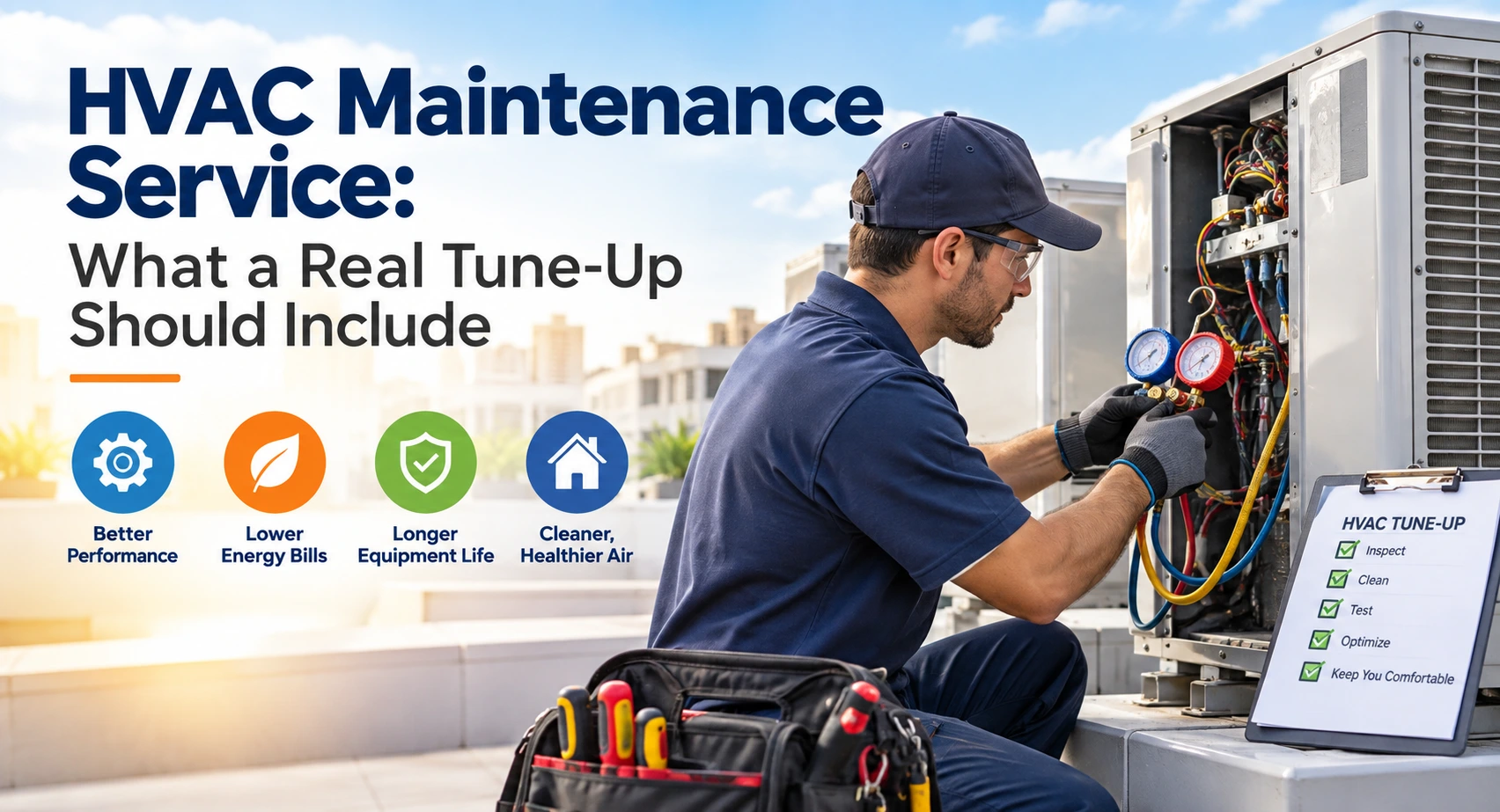
HVAC Maintenance Service: What a Real Tune-Up Should Include
What an HVAC maintenance service should include: real tune-up checks, written measurements, and the best time to book AC and heating tune-ups in Orange County and Los Angeles.
Read article
Why "Set It and Forget It" Doesn't Work for Your HVAC System
Stop reacting to breakdowns. HiLo Heating & Air's seasonal HVAC maintenance keeps your system ready before summer heat or winter cold ever hits.
Read article
Why Skipping HVAC Maintenance Almost Always Costs You More Later
Skip the surprise breakdowns. HiLo Heating & Air's HVAC maintenance service keeps your system running efficiently year-round. Book your tune-up today.
Read articleNeed HVAC Help?
Call HiLo Heating and Air today for expert service. Explore our services or find your city.
(714) 853-5534