
Why Is My Energy Bill So High in Winter? Check This First
Written by Cody
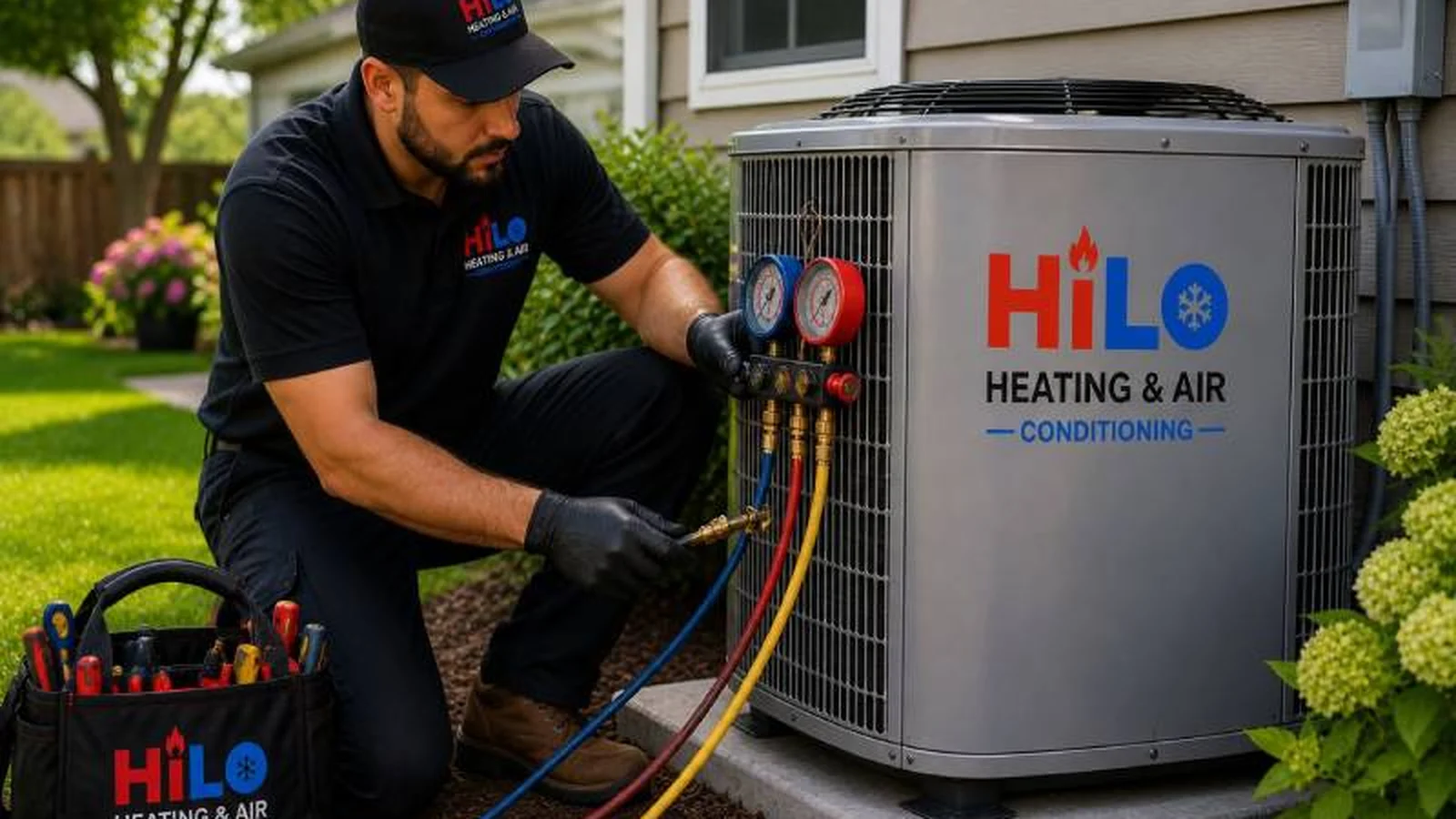
Quick answer: The most common HVAC reason a winter bill jumps in Orange County is auxiliary electric strip heat running when the heat pump alone should carry the load. Check the thermostat first: if it shows AUX or EM HEAT on a mild morning while the heat is running, that is your answer. If it does not, the money is leaving through leaky ducts or going to a load that is not HVAC at all.
A high winter bill usually traces to one of about a dozen causes. Five belong to us.
Most articles hand you a furnace checklist without asking which line moved. Answer that and you can throw out half the list before you climb into the attic.
Split the Bill Before You Blame the HVAC
Electricity is metered in kilowatt-hours. Gas is metered in therms. Dollars rise for two reasons: you used more, or the price per unit went up. Check quantity first, because a rate change needs no diagnosis.
| What moved | What it usually means | Where to look first |
|---|---|---|
| kWh up, therms flat | Electric heat, or a new electric load | Aux heat, space heaters, pool pump, EV, lights |
| Therms up, kWh flat | Gas heating or gas water heating | Furnace runtime, water heater, gas dryer |
| Both up | Colder weather plus longer runtime | Duct loss, filter, air sealing |
| Neither moved, dollars up | Rate or tier change | Your rate plan, not your equipment |
That last row is the one people miss. If usage is flat and the bill is not, maintenance will not fix it, so ask your utility what changed.
Count the days in the billing period too. A 34-day cycle against a 28-day cycle looks like a spike and is just arithmetic.
The Five HVAC Causes, Ranked by How Often They Are the Real Answer
1. Auxiliary strip heat running too much
The top of the list for any home with a heat pump, and the cause we confirm most often on a winter high-bill call. Gas heat? Skip to number two.
2. Duct leakage in the attic or crawlspace
ENERGY STAR states that in a typical house, about 20 to 30 percent of the air moving through the duct system is lost to leaks, holes, and poorly connected ducts.
Most Orange County ductwork runs through an attic that bakes in July and sits at outdoor temperature in December. A supply run leaking 20 percent up there is heating the attic, and the system runs longer to make up for it. The tell is a bedroom door you have to crack, a whistling return grille, or a house that is half comfortable.
3. Restricted airflow from a dirty filter or coil
ENERGY STAR is blunt here: a dirty filter slows air flow and makes the system work harder to keep you warm.
When a filter mats over, the blower moves less air, so the system runs longer to hit the same setpoint. Long runtime is the whole bill. A clogged coil does the same thing, except you can’t see it, which is why AC maintenance is worth booking in fall rather than after the first cold week.
4. Short cycling from an oversized system
An oversized system heats a room fast, satisfies the thermostat, and shuts off before the house warms through. Then it starts again, so you get temperature swings and uneven rooms. That’s an installation problem, not a maintenance problem, and a technician confirms it by comparing cycle runtime to outdoor temperature.
5. A thermostat schedule that fights the house
Two failures live here. One is a schedule nobody updated: heat kicking to 72 at 5 a.m. and holding all day while the house is empty.
The other is specific to heat pumps. ENERGY STAR’s saving tips are direct: unlike a furnace, a heat pump does not save energy by turning it down when you are away or asleep, so pick a comfortable temperature and leave it there. If someone set your schedule without asking what system you own, a thermostat check is quicker than a repair call.
Auxiliary Heat, Explained Without the Sales Pitch
Strip heat is a set of electric resistance coils inside the air handler. Picture a toaster element in the duct.
Resistance heat turns one unit of electricity into one unit of heat. A certified heat pump can deliver up to three times more heat energy than the electricity it consumes. Same warmth, roughly three times the electricity when the strips are doing the work. In a mild Orange County December, that gap is the difference between a normal bill and a call to us.
What turns it on:
- Recovery from a setback. Raise the thermostat three or four degrees and most systems bring on the strips. Two degrees at a time avoids it.
- Defrost. The outdoor coil frosts on a damp morning. The system reverses briefly to melt it and runs aux heat so it does not blow cold air at you.
- Cold below the balance point. Every heat pump has an outdoor temperature where it cannot keep up alone. Rare near the coast, real on a freezing night in Yorba Linda.
- A fault. A failed sensor, a stuck reversing valve, low refrigerant, or a thermostat left in EM HEAT. This is the expensive category.
How to tell: look at the thermostat. Many units show AUX while the strips are energized, and a smart app will break out auxiliary runtime. Then use your hand. Supply air during strip heat often feels hotter and drier than a heat pump running normally. Hot and dry is usually the strips.
The test that settles it: pick a morning in the high 40s, while the heat is running, and check the runtime history. Aux heat has no business running then. If it is, book a heating repair visit before the next cold week.
The Causes That Are Not HVAC at All
November and December bring loads that did not exist in October, and they land on the same bill.
Water heater. Colder groundwater means the same shower takes more energy. Add holiday guests and a gas water heater can move the therm line by itself.
Pool and spa pumps. ENERGY STAR notes a pool pump could be your home’s second largest energy user, and that halving pump speed drops energy use to about one eighth.
EV charging. If a car joined the household this year, its charging is a new block of kWh with no seasonal pattern.
Holiday lighting. Old incandescent strings are the ones to suspect. ENERGY STAR certified LED strings use about 92 percent less energy than incandescent strings.
Space heaters. One 1,500 watt heater running eight hours a night pulls about 12 kWh a night. Multiply by your rate and 30 nights.
Rate changes. An increase raises your bill without changing anything in your house, and no contractor can diagnose it. If kWh and therms are flat, this is your answer.
How to Diagnose It Yourself in an Hour
Work through this in order.
- Get both bills. Same month last year and this year. Write down kWh, therms, days in the period, total dollars.
- Compare quantity, not dollars. If both are flat and dollars are up, stop and call your utility. If one moved, you know which system to investigate.
- Read the meter with everything off. Turn the HVAC off at the thermostat and breaker. Note the reading, wait 20 minutes, read again. Anything still moving is a load you forgot.
- Sit with the thermostat. Read the schedule, not the current temperature. Look for a 5 a.m. jump to 72, a hold that never ends, the fan on ON instead of AUTO, or EM HEAT. Fan ON runs the blower all day and is a common, expensive setting.
- Pull the filter. Hold it to a light. If you cannot see through it, the system has been starved for air.
- Walk the attic or crawlspace. Look for flex duct pulled off a collar, crushed runs, or ducts on bare joists with torn insulation. You will not measure leakage by eye, only catch obvious failures.
- List anything new. Space heater, second fridge, hot tub, EV, gaming rig. Anything new since last winter.
If the HVAC is the only thing left, book a heating maintenance visit instead of guessing at parts.
What Actually Reduces the Bill, Ranked by Cost
Cheapest first. Replacement is last for a reason.
Free to cheap. Change the filter. Set the fan to AUTO. Flatten the schedule. On a heat pump, hold a steady temperature, because a setback does not save energy and the recovery can bring on the strips. On gas, a modest overnight setback still helps.
Moderate. Air sealing and duct sealing. ENERGY STAR states that sealing and insulating ducts can improve heating and cooling efficiency by as much as 20 percent, and that air sealing plus insulation can save up to 10 percent on annual energy bills. Best return per dollar for most older Orange County homes, because the attic is where both problems live. Start with duct sealing if the runs are intact but leaky, or duct repair if a run has come apart.
Larger. Attic insulation and windows. Real money, slow payback, and worth doing while the attic is open for duct work.
Last. Equipment replacement. ENERGY STAR’s advice is to have equipment evaluated once it passes 10 years, or sooner if it stops keeping the house comfortable. That is a low bar, and still not a reason to lead with replacement. If your ducts lose a quarter of the air, a new unit inherits the problem at full price. We cover what an HVAC replacement costs in Orange County.
The Heat Pump Nuance Nobody Puts in the Brochure
Heat pumps are excellent machines, and not automatically cheaper to heat with in California in 2026.
A heat pump moves heat instead of burning fuel, which is why it beats a furnace on efficiency. Efficiency is not cost per unit of heat. When electricity costs several times what gas costs per unit, a 96 percent furnace can still deliver a therm for less.
That math depends on rates. We keep it in one place: heat pump vs. furnace in Orange County works through the break-even.
What a Technician Can Measure That You Cannot
You can find a lot in an hour. These five need instruments.
Static pressure. A manometer reads resistance in the duct system. High static means the blower is pushing against a restriction and moving less air than designed. It’s the most useful number on a high-bill call.
Temperature split. Measure return and supply air, then compare that difference to the rise printed on the rating plate inside the unit. Outside the designed range points to airflow, combustion, or charge.
Auxiliary heat runtime. A clamp meter on the strip circuit, or the thermostat history, turns “I think it runs a lot” into a number.
Duct leakage. A duct blaster pressurizes the system and measures how much air escapes. A pressure pan checks individual joints.
Refrigerant charge. Subcooling and superheat against the manufacturer’s chart. An undercharged heat pump works harder for less heat, which in heating mode looks like a bill problem.
What HiLo Checks on a High-Bill Call
We start with the bill. Bring the last two winters if you have them.
The visit runs in a fixed order: thermostat and schedule, filter and blower, static pressure, temperature split, aux runtime on a heat pump, then the accessible ducts and attic. If the equipment is fine and the ducts are the problem, we say so. If the cause is your pool pump, we say that too.
HiLo Heating & Air is family-owned and has worked on Orange County and Los Angeles homes since 2016. We are at 8131 Electric Ave, Stanton, CA 90680, licensed as a California C-20 contractor under #1155955. Call (714) 853-5534 or book a visit. We serve Anaheim, Irvine, Huntington Beach, Costa Mesa, and the rest of the county.
If usage did not move and only the dollars did, a technician cannot help.
FAQ
Why is my electric bill high in winter but my gas bill is normal?
Your electric side is carrying something new: strip heat, a space heater, a pool pump, holiday lights, or an EV. A heat pump with electric backup is the most common HVAC answer. Check for AUX on the thermostat first.
How do I know if my auxiliary heat is running?
Look for AUX or EM HEAT on the display, check runtime in your thermostat app, and feel the supply air. Strip heat usually feels hotter and drier. It should be off on a morning in the high 40s.
Does a dirty filter really raise my bill?
Yes, and it is the cheapest thing here to fix. A matted filter restricts airflow, so the blower runs longer. ENERGY STAR recommends checking monthly in heavy-use months.
Is it cheaper to heat with a heat pump or a furnace here?
It depends on your rates, and at 2026 California rates a 96 percent furnace often delivers heat for less per unit. The heat pump usually wins on total cost when it also replaces an aging air conditioner.
Why did my bill go up when I did not change anything?
Three candidates: colder weather and longer runtime, a rate or tier change, or a load you stopped thinking about. Compare kWh and therms against the same month last year. If both are flat, it is your rate.
Will a new HVAC system lower my winter bill?
Sometimes, but rarely as the first move. A new unit only hits its rated efficiency when the ducts, charge, and airflow are right, and leaky ducts eat the gain. Fix the cheap things first.
Should I turn the heat off when I leave?
For a gas furnace, a small setback saves energy and the house recovers quickly. For a heat pump, ENERGY STAR’s advice is to hold a steady temperature, because recovery can bring on strip heat and cost more than it saves.
Cody
Verified TechnicianLead HVAC Technician & Content Lead
Cody is a lead technician at HiLo Heating & Air with over a decade of hands-on experience repairing, installing, and maintaining HVAC systems across Orange County. He holds EPA Section 608 certification and works under HiLo’s California C-20 contractor license (#1155955). Cody writes HiLo’s HVAC blog to help homeowners understand their systems, spot problems early, and make informed repair-versus-replace decisions.
Need help with this? HiLo can help.
Related services from HiLo Heating & Air:
Related Articles
HVAC System Inspection in Stanton, CA: What to Expect and Why It Matters
An HVAC system inspection finds the real cause of uneven rooms, weak airflow and high bills. Here is what to expect and why it matters.
Read article
HVAC System Inspection: What Really Gets Checked and Why It Protects Your Home and Wallet
What an HVAC system inspection really covers, when to schedule one, and how it lowers energy bills, extends equipment life, and protects your home.
Read article
HVAC Maintenance Service: What a Real Tune-Up Should Include
What an HVAC maintenance service should include: real tune-up checks, written measurements, and the best time to book AC and heating tune-ups in Orange County and Los Angeles.
Read articleNeed HVAC Help?
Call HiLo Heating and Air today for expert service. Explore our services or find your city.
(714) 853-5534